The Blinking Cursor
We launched Teammates to create virtual colleagues that actually understood you. The hard truth: 9 out of 10 just sat there.

We launched our startup, Teammates, in early 2025 to create virtual colleagues that actually understood you. Your context, your team, your way of working. Not chatbots. Not copilots. AI with identity, memory, personality. Multiplayer collaborators who could get real work done.
The vision was hyper-personalized AI agents. Teammates that would learn your preferences, adapt to your style, evolve to meet your exact needs. 100% malleable to you. Software that shaped itself around the human, not the other way around.
Customers created thousands of Teammates. They gave them names, cute avatars, corporate email addresses, and even LinkedIn profiles. Teammates hung out in company Slack channels, bantered with the humans, and became part of the team.
Do Virtual Employees Play Virtual Minesweeper?
The hard truth: 9 out of 10 of these Teammates just sat there. Twiddling their thumbs. Playing virtual Minesweeper. “Working” from home. Resting and vesting.
It’s not because they couldn’t do real work. Of course they could. They could do a LOT of real work. BUT! And here’s the big but: they needed someone to tell them what to do. And no one was telling them what to do.
When it came to teaching Teammates, giving them requirements, and assigning them work, everything was underspecified. All the time.
Real examples from real users:
“Redesign my website.”
“Run our company’s social media. Post interesting things on Insta every day.”
“Do your job.”
Those were the entire assignment. That’s literally what the customer typed. And then waited. And then (reasonably) bounced.
I’m not blaming anyone, least of all our customers. These are busy people with real jobs who genuinely want to be more productive. But there’s a chasm between wanting something done and specifying what done means. You don’t realize the chasm is Grand Canyon-sized until you try to hand the work to someone else, human or AI.
Specification is labor. Invisible labor. It doesn’t feel like work until you’re neck deep into “how would you describe your brand voice?” and “who is your target audience?” That’s when you roll your eyes and just write the damn post yourself. It’s just too hard, staring at that blank box and that blinking cursor, to think deeply about what you want and why.
“Where Do You Want to Go Today?”
In 1994, Microsoft launched a global ad campaign with the slogan “Where do you want to go today?” It was supposed to be inspirational. The promise of infinite possibility. Is there anything Windows 95 can’t do?
But when you actually logged in to Windows 95, you quickly noticed they had to include a big button labeled “Start” because no one would know where to begin otherwise.
Fast forward thirty years. Every app with an empty text field is asking the same question:
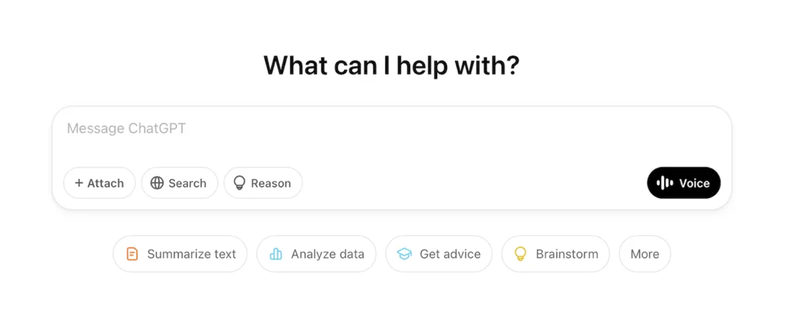
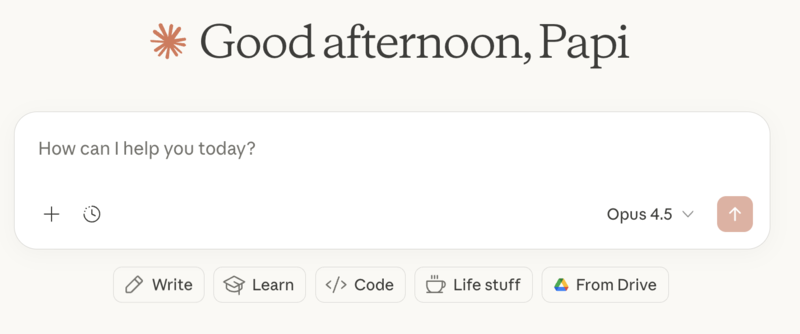
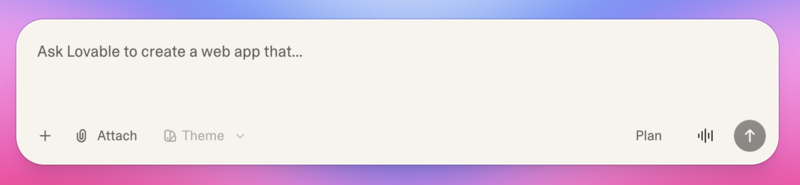
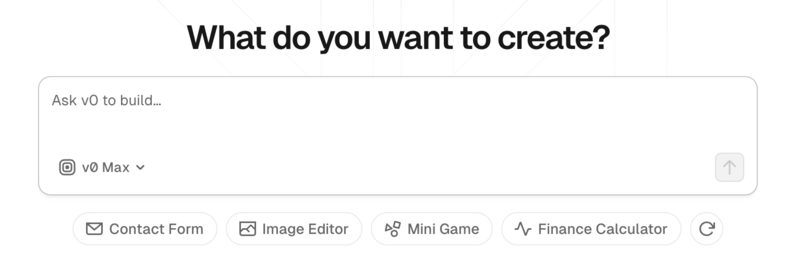
Thirty years of better and better tools, all asking the same question: What do you want?
But what if you don’t know what you want?
None of us do. Not really. We know the problem exists. We feel it. But we can’t articulate the solution. I can barely decide which roll of toilet paper to buy at the grocery store! And I’m supposed to think through all the edge cases of an app??
I don’t know what features I need. I just want to stop missing summer camp registration for my kid. I want to know which clients are late on invoices and what to say to each of them. I want to know which states my small business needs to file compliance docs in this quarter. I want to know if we can afford the summer vacation we’re planning.
That’s not a prompt. That’s not a vibe-code app. That’s software built specifically for me. My life. My problems.
If it existed, I’d already be using it. But it doesn’t. Because who would build it? The market for my exact situation is exactly one. And you can’t make that up in volume.
At least, you couldn’t…
So What’s Next?
What we learned building Teammates is that there ought to be a completely new way to build hyper-personalized software. And the latest generation of models is finally making it possible. We’re on the cusp of personal software that doesn’t start with a blinking cursor.
Software that doesn’t wait to be prompted.
Software that observes, infers, proposes.
Software that writes the spec about you.
Software that builds itself around you.
Lots more soon…